The Role of Concrete in Disaster-Resilient Building Design
Extreme weather has become part of life in the Gulf States. From hurricanes to flooding, construction professionals in Texas and Louisiana understand how vital strong materials are for public safety. That’s why disaster-resilient construction is more than a trend, it’s a necessity. Concrete remains one of the most dependable materials for protecting lives, property, and business continuity when storms hit.
At Ashton Sawing & Drilling, we’ve seen firsthand how the right mix design, placement techniques, and reinforcement choices create structures that stand up to the harshest conditions. Every project we take on aims to balance durability, efficiency, and long-term strength.
Why Concrete Is the Foundation of Resilient Design
Concrete has always been known for its strength, but its role in modern resilience goes far beyond that. It’s not just a building material; it’s a structural safeguard. Properly engineered concrete resists wind, water, and impact far better than many alternatives.
In regions like Texas and Louisiana, where storms often cause widespread damage, our commercial and industrial clients rely on concrete’s natural toughness. When reinforced correctly, it can absorb and distribute heavy forces, keeping buildings intact during high winds or flooding. It’s no surprise that more designers are prioritizing concrete for flood-resistant buildings and hurricane-proof structures.
The Science Behind Concrete Durability
The durability of concrete comes from a combination of composition and craftsmanship. It starts with the right mix, balancing cement, aggregates, and additives that enhance resistance to moisture and temperature changes. The curing process is just as critical, ensuring the material reaches its full strength.
In disaster prone areas, specialized mixes include air-entraining agents or waterproofing admixtures. These prevent cracking and water intrusion, which are common causes of long-term damage. The result is concrete durability that can handle years of environmental stress.
Our teams in Texas and Louisiana often work on projects where that extra strength makes all the difference. Structural concrete in coastal zones, for example, faces constant exposure to saltwater and humidity. We use proven techniques to minimize corrosion and maintain integrity even in harsh conditions.
Applications in Flood & Storm-Prone Regions
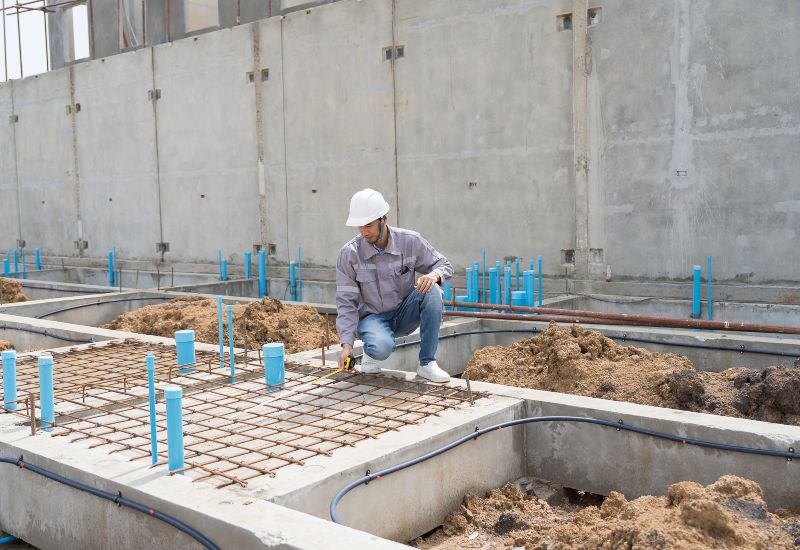
Concrete plays a major role in both preventing and mitigating disaster damage. In flood-resistant buildings, elevated foundations and reinforced slabs keep structures stable even when the ground is saturated. Strong foundations also stop shifting and cracking caused by soil erosion during floods.
For hurricane-proof structures, design is just as important as materials. Reinforced concrete walls, floors, and roofs resist both pressure and impact from debris carried by strong winds. Our work with commercial clients across Texas and Louisiana often focuses on these reinforcements, especially in industrial facilities that must protect valuable equipment and operations.
We’ve also seen lightweight concrete make an impact in storm resilience. It reduces overall structural weight, lowering stress on foundations without sacrificing strength. Combined with modern placement techniques, it helps create efficient, high-performance buildings ready for any challenge.
Precision Services That Strengthen Concrete Performance
Resilient construction depends on both design and execution. That’s where our expertise comes in. Our diesel and electric slab sawing services allow precise modifications to existing floors and foundations while maintaining structural balance.
When projects call for thick or reinforced sections, our wire and wall sawing techniques provide clean, accurate cuts that prepare the structure for retrofits or reinforcements. These methods are especially useful in flood control systems, utility tunnels, and storm-ready facilities where tight tolerances are crucial.
Our robotic breaking and break and haul services also play a key role. These technologies remove damaged concrete safely, letting crews replace sections without exposing the rest of the structure to stress. In disaster recovery work, quick and controlled removal helps rebuild faster and safer.
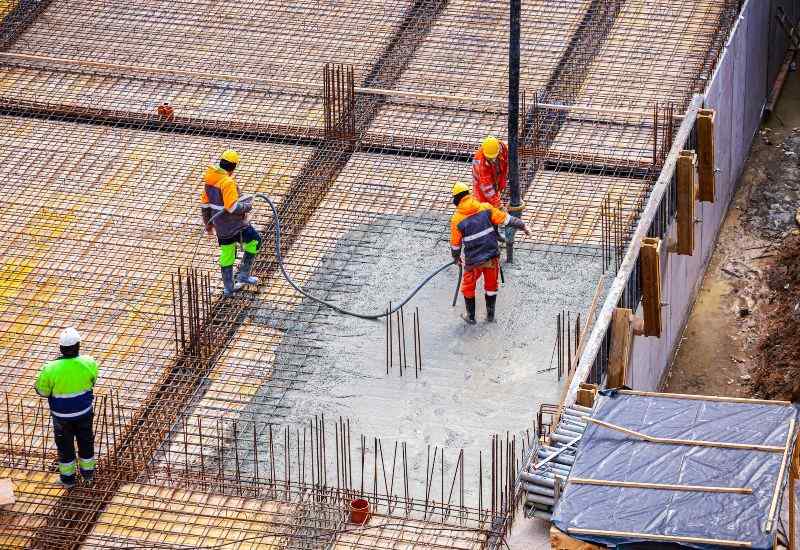
And when new construction demands high-precision foundations or structural concrete placement, we bring in advanced laser screed systems to achieve level, dense surfaces. That level of precision ensures water drains correctly, reducing pooling that can lead to structural weakness over time.
Concrete’s Role in Sustainable Resilience
Durability and sustainability often go hand in hand. Every time a building withstands a hurricane or flood without major damage, it prevents the energy and material waste of reconstruction. Concrete’s long lifespan directly supports sustainable building goals.
Our teams design mixes that incorporate recycled materials and locally sourced aggregates whenever possible. Using concrete this way lowers a project’s environmental impact while improving the structure’s ability to handle extreme conditions. For clients across Texas and Louisiana, it’s a smart choice that benefits both safety and sustainability.
Concrete’s thermal mass also helps regulate temperature inside large buildings, making them more energy efficient. That reduces heating and cooling demands, saving operational costs long after construction ends.
Commercial & Industrial Resilience in Action
We’ve worked on countless commercial and industrial projects across the Gulf States, from large warehouses and manufacturing plants to transportation and public infrastructure. Each project reinforces the same truth. Disaster resilience isn’t just about reacting to storms; it’s about planning ahead with the right materials and techniques.
Concrete continues to prove its value in this effort. It can be shaped, cut, reinforced, and adapted to fit the needs of nearly any structure. When paired with skilled planning and precision tools, it creates facilities built to endure.
Our company understands that downtime after a disaster can mean millions in lost productivity. That’s why we focus on both preventive design and rapid response capabilities. Whether it’s cutting through a damaged foundation or placing new structural sections after a storm, our equipment and experience keep recovery moving.
Building a Safer Future With Concrete
As the frequency of extreme weather continues to rise, disaster-resilient construction will shape how Texas and Louisiana build for the future. The challenge isn’t just to rebuild stronger but to build smarter from the start.
Concrete gives engineers and contractors the flexibility to do exactly that. It provides unmatched strength, resistance, and longevity, forming the foundation of flood-resistant buildings and hurricane-proof structures that protect people and investments.
At Ashton Sawing & Drilling, we’re proud to support that mission. Our team brings decades of experience, advanced equipment, and a commitment to quality that keeps clients’ projects safe and efficient. If you’re planning your next commercial or industrial build, reach out to us. Let’s create structures that stand strong no matter what the Gulf weather brings.