Ground Penetrating Radar (GPR): A Gamechanger for Subsurface Investigations
How Ground Penetrating Radar Improves Subsurface Investigations
Before a saw cuts or a drill cores into a commercial slab, one question matters most: what’s hidden inside the concrete or buried below the surface? Guess wrong, and you risk cutting a live utility line, damaging embedded rebar, or blowing your project timeline. That’s where ground penetrating radar changes the game for commercial and industrial teams across Texas and Louisiana.
What Is Ground Penetrating Radar
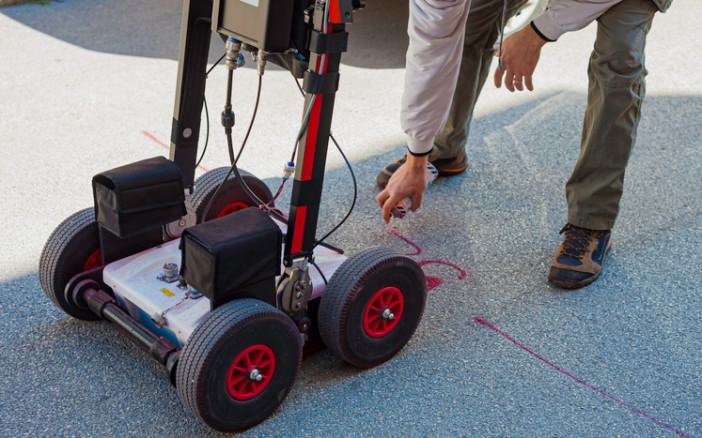
Ground penetrating radar is a non-destructive site investigation method that uses radio waves to map what lies beneath a surface. Instead of digging or drilling blindly, crews scan the area first and see a clear picture of embedded objects, utilities, and structural features.
For commercial and industrial clients, this matters. A single misplaced cut through a post-tension cable or a fiber line can halt a project and cost thousands. GPR subsurface investigations give your team the information needed to work safely and confidently.
Ashton has spent 25 years building a reputation as one of the largest and most trusted commercial concrete service companies in the Gulf States. Pairing accurate scanning with our concrete work means fewer surprises and smoother projects from start to finish.
How Ground Penetrating Radar Works
Understanding how ground penetrating radar works helps you see why it’s so reliable. The process is straightforward, even if the technology behind it is advanced.
A GPR unit sends short pulses of electromagnetic energy into the concrete or ground. When those pulses hit an object with different properties, such as rebar, conduit, a void, or a pipe, part of the signal bounces back to the antenna.
The equipment records how long each signal takes to return and how strong it is. From that data, a trained technician builds a detailed map showing:
- The depth of buried or embedded objects
- The location and spacing of rebar or cables
- Voids, cracks, or changes in material density
Denser or metallic objects reflect stronger signals, which helps technicians interpret exactly what’s below. With Ashton’s new equipment and experienced crews, you get clear, actionable results, not guesswork.
Benefits of Ground Penetrating Radar
The benefits of ground penetrating radar go far beyond simply “seeing” underground. For commercial and industrial projects, GPR delivers measurable value.
Safety first. Scanning before cutting or drilling protects your crew and avoids strikes on live electrical, gas, or water lines.
Cost control. A quick scan is far cheaper than repairing a severed utility or a damaged structural element.
Speed. As a non-destructive site investigation, GPR requires no digging, no core samples, and no downtime waiting on excavation.
Accuracy. You get precise depth and location data before the first blade touches concrete.
Cleaner projects. No exploratory holes mean no unnecessary mess or repair work on finished surfaces.
Underground Utility Detection Made Simple
Underground utility detection is one of the most common reasons commercial and industrial clients call for GPR scanning services. Before any excavation, trenching, or foundation work, you need to know what’s already down there.
Buried utilities include:
- Electrical conduit and power lines
- Water and sewer pipes
- Gas lines
- Telecom and fiber-optic cable
- Storm drains and older, undocumented infrastructure
Old site plans are often incomplete or outdated. Lines get added, moved, or abandoned over decades, and paperwork rarely keeps up. GPR fills that gap by revealing what’s actually present, not just what a drawing says should be there.
For industrial sites, warehouses, parking structures, and commercial builds, accurate utility detection prevents costly strikes and keeps your teams safe. Pairing this with our core drilling and concrete sawing services means you can scan and cut with one trusted partner instead of juggling multiple subcontractors.
Common Applications of GPR Scanning Services
GPR scanning services support a wide range of commercial and industrial needs. Because Ashton is a turn-key contractor, we often use scanning as the first step before a larger scope of work.
Here are the most common applications:
Concrete slab and wall scanning. Locate rebar, post-tension cables, and conduit before cutting or drilling.
Pre-excavation utility locating. Map buried lines before trenching or foundation work begins.
Structural assessment. Identify voids, honeycombing, or deterioration inside existing concrete.
Rebar mapping. Confirm reinforcement layout and spacing for renovations or load evaluations.
Site planning. Support GPR subsurface investigations for new construction and expansions.
Frequently Asked Questions
How deep can ground penetrating radar detect objects underground?
Depth depends on soil and material conditions. GPR can reach several feet in dry, sandy soils, but dense clay or high moisture can reduce that range. Concrete scanning typically covers the full depth of standard slabs and walls.
Can GPR distinguish between metallic and non-metallic utilities?
Yes. GPR detects both metallic and non-metallic objects, including PVC pipe, fiber-optic lines, and conduit. A trained technician can identify utilities that other locating methods miss.
Is ground penetrating radar safe to use around active utilities and occupied buildings?
Yes. GPR is a non-destructive method that uses low-power radio waves, posing no risk to people, utilities, or building operations.
Can GPR be used on concrete slabs and walls as well as soil?
Yes. GPR works on soil, concrete slabs, walls, bridge decks, and more, making it ideal for both utility detection and concrete scanning.
How long does a typical GPR survey take to complete?
Smaller scans can take an hour or less, while larger sites may take a full day. Ashton’s quick turnarounds and multiple locations mean we schedule scans fast and keep your project on track.
Scan Before You Cut
Don’t let hidden utilities or embedded rebar derail your next commercial or industrial project. With 25 years of experience, new equipment, and a family-owned commitment to treating every client like part of the team, Ashton Sawing and Drilling delivers accurate GPR scanning services and full turn-key concrete solutions across Texas and Louisiana.
Contact Ashton Sawing and Drilling today to schedule your GPR subsurface investigation and keep your project safe, on time, and on budget.